Putāruru, Waikato
Location
February 2026
Completed
30.8kW
System size
70 × LONGi 440W
Panels
Entelar 29.9kW
Inverter
Three-phase
Supply
Grid-connected
Operation
Real-time
Monitoring
Project Overview
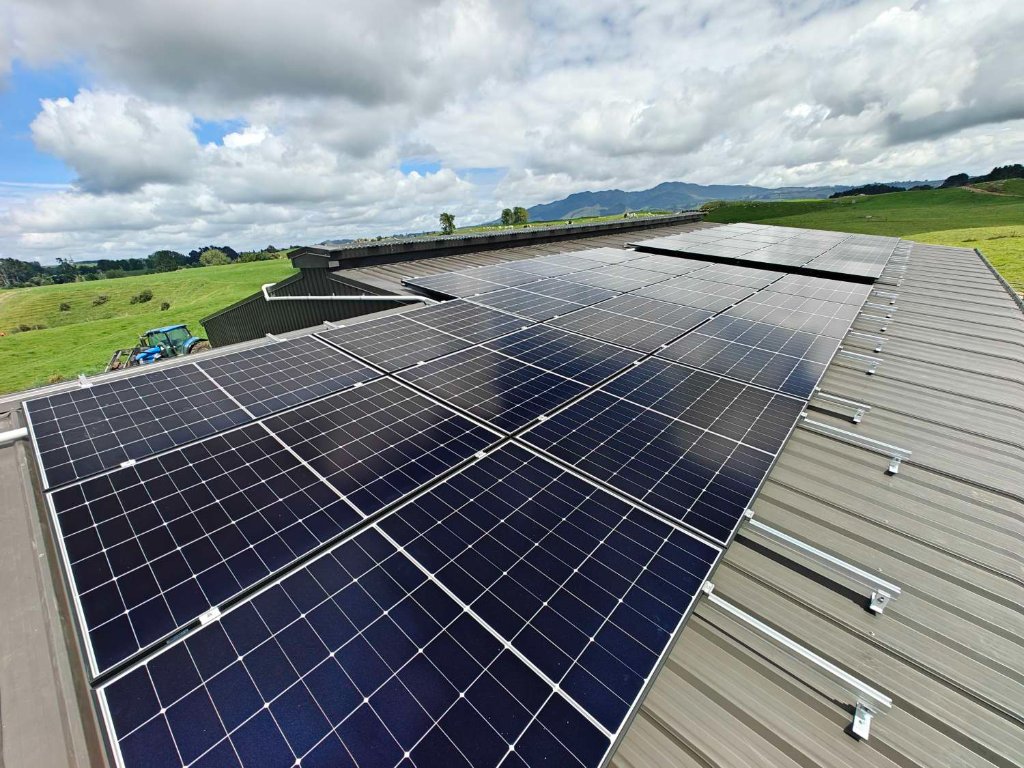
A 30.8kW grid-connected dairy farm solar installation in Putāruru, Waikato. The system uses 70 LONGi Hi-MO 6 Scientist 440W panels and an Entelar 29.9kW three-phase smart string inverter, mounted on the roof of the dairy shed. It was designed to offset the shed's daytime electricity use rather than to maximise exports, so the solar generation works against the farm's actual running costs.
Project Story
The customer wanted to reduce the cost of running the dairy shed by generating electricity during the hours the farm naturally uses the most power. Rather than designing the system around maximum exports, it was designed to match typical daytime dairy operations. The objective was to offset the electricity used by the shed during milking, milk cooling, pumping and general farm operations. Because those loads fall mainly during daylight hours, solar generation lines up closely with when the shed is actually drawing power.
System Design
A three-phase inverter is well suited to dairy farms. Dairy sheds run milking plant, milk cooling compressors, water pumps and washdown equipment, often across more than one phase. A three-phase inverter balances that load properly and handles the larger, continuous draw of cooling equipment without overloading a single phase. The system was sized to generate during the hours the farm uses the most power, rather than to maximise exports.
- 30.8kW DC system sized to match daytime dairy shed load
- 70 LONGi Hi-MO 6 Scientist 440W panels
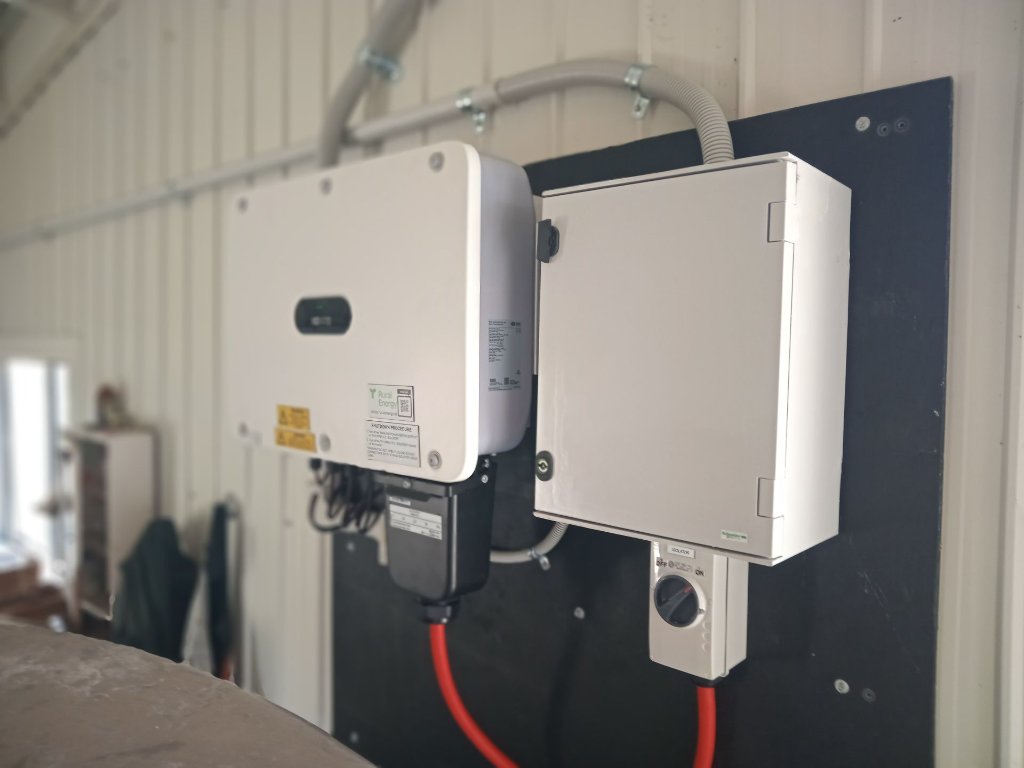
- Entelar 29.9kW three-phase smart string inverter
- Roof-mounted array on the dairy shed
- Real-time generation monitoring
- Grid-connected operation, no battery storage required
Why 30.8kW?
The system wasn't designed to offset every kilowatt-hour the farm uses over a year. It was designed around the dairy shed's actual daytime operating load, so that as much of the solar generation as possible is used directly on site rather than exported to the grid.
Why Dairy Farms Suit Solar
Dairy farms are one of the strongest applications for solar generation in New Zealand. Milking, milk cooling, pumping and washdown generally occur at similar times every day, which allows solar generation to line up naturally with electricity demand. That predictable load profile is one of the reasons dairy farms often achieve strong returns from solar.
Milking happens every day
Cows are milked morning and afternoon, every day of the year. That creates a consistent, predictable electrical demand that lines up with daylight hours.
Milk cooling demand
Milk has to be cooled quickly after each milking, which creates a steady electrical load from compressors and cooling equipment through the day.
Pumps and washdown during daylight
Water pumps, milk pumps and washdown equipment run during and around milking, which falls inside the hours solar panels are generating.
Large, clear roof areas
Dairy sheds have big, relatively unshaded roofs, which suit a roof-mounted array and keep the system simple and cost-effective.
Stable, predictable energy use
Farm energy use tends to be steady and predictable day to day, which makes it easier to size a solar system to offset the shed's actual consumption.
Three-phase supply
Most dairy sheds run on three-phase supply, which a three-phase inverter matches cleanly for balanced, efficient generation.
Lessons from this Project
A few things worth understanding if you're planning a rural solar system.
Design around how the shed uses electricity
The best rural solar systems are designed around how the dairy shed actually uses electricity, not around installing the largest system possible.
Solar works best with reliable daytime demand
Solar generation lines up well with dairy operations because milking, cooling, pumping and washdown happen during daylight hours.
Every farm is different
Milking schedules, cooling systems, pumps, irrigation and future expansion all influence the final design. Understanding those loads matters more than system size.
Why a three-phase inverter suits dairy farms
Dairy sheds run larger, continuous loads across three phases. A three-phase inverter balances that load and handles the cooling and pumping demand cleanly.
Plan for future expansion
Farms evolve over time. Herd numbers change, plant upgrades happen, and additional refrigeration, pumps or automation may be added. A well-designed system considers future expansion, not just today's electricity demand.
Dairy sheds are demanding environments
Dairy sheds are demanding electrical environments. Dust, moisture, vibration and regular washdown all influence equipment selection and installation methods. Choosing quality equipment and installing it correctly is an important part of achieving long-term reliability.
System Performance
The headline numbers for the system, scannable rather than buried in a paragraph.
30.8kW
DC system size
70
LONGi Hi-MO 6 panels
440W
Panel rating
29.9kW
Entelar inverter
Three-phase
Inverter type
Grid-connected
Operation
Real-time
Monitoring
Roof-mounted
Array
Equipment Installed
Every component is matched to the shed's load and the farm's three-phase supply.
- 70 × LONGi Hi-MO 6 Scientist 440W solar panels
- Entelar Energy Smart String Inverter, 29.9kW three-phase
- Roof-mounted array on the dairy shed
- Real-time generation monitoring
- Grid-connected operation
- Commercial-grade protection and isolation
Real-time monitoring is set up through the Entelar platform, with remote performance reporting. We also handle ongoing monitoring and servicing for the systems we install.
Why This Project Matters
This is our first dedicated dairy farm project, and it shows why dairy farms are one of the strongest applications for solar generation in New Zealand. The shed's largest loads, milking, milk cooling and pumping, all fall during daylight hours when the panels are generating. That means more of the solar energy is used on site, offsetting purchased electricity, instead of being exported for a low rate. It's a clear example of designing a system around how the customer actually uses electricity.
Read more about Farm Solar, our commercial solar services, battery storage options, and funding and finance for commercial projects, or learn about 2E Electrical.
Why Choose 2E Electrical
We're a local Waikato electrical contractor, and rural work like this is where we're strongest.
Registered electricians
Qualified, registered electricians design, fit and sign off every system, fully compliant.
Turnkey rural systems
Design, install, commissioning and monitoring, all from the one crew.
Engineering-led
Load profiling and proper system design before panels go up, not after.
Local Waikato crew
Based in Hamilton. We know the WEL Networks system and the local rural scene.
Monitoring and servicing
We set up live monitoring and back it up with ongoing local servicing.
Battery-ready
Systems are designed so storage can be added later if it makes sense.
Services Provided
- Site assessment and load profiling
- Dairy shed solar system design
- Supply and install of panels, inverter and mounting
- Roof-mounted array installation
- Three-phase inverter integration
- Commercial-grade protection and isolation
- Commissioning and performance testing
- Real-time monitoring setup
- Handover documentation
Project Gallery
Project Delivery
This solar installation was delivered by 2E Electrical in partnership with Rural Energy. Rural Energy manages the customer's retail electricity agreement and energy offering, while 2E Electrical completed the solar installation, commissioning and technical delivery of the project. This collaborative approach combines professional solar installation with an integrated energy solution for the customer.
Related Services
Farm Solar
Solar designed around dairy and rural operations across the Waikato.
Learn moreCommercial Solar
Solar for Waikato businesses running daytime loads, from farms to manufacturing.
Learn moreHamilton Residential Case Study
A residential system designed around real billing data and actual electricity use.
Learn morePukete Community Project
A 65kWp commercial solar system delivered turnkey for Hamilton City Council.
Learn moreBattery Storage
Add storage to shift solar into the evening or keep essential loads running in an outage.
Learn moreTalk to Us About Your Farm Solar Project
If you run a dairy farm or rural operation in the Waikato, we'll come out, look at the shed and your electricity use, and show you what's possible, with honest figures.
Book Your Free Assessment
Tell us about your place and we'll be in touch.