Designed Around the Overnight Load
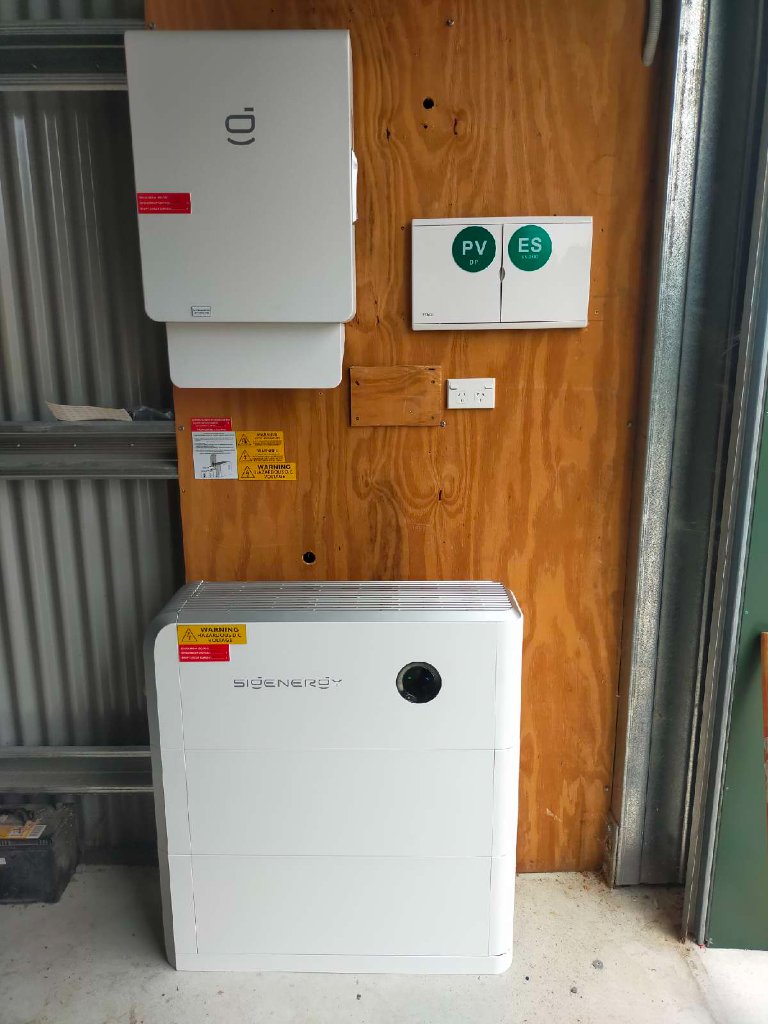
30kW Sigenergy hybrid solar & battery, Ngāhinapouri
A lifestyle property with commercial refrigeration running after dark. Rather than just generating solar by day, this system stores it and shifts it into the evening, where the property's biggest loads actually are.
Ngāhinapouri
Location
30kW
System size
Sigenergy
Platform
Three-phase
Supply
Hybrid
Inverter
Integrated
Battery
Whole-home
Backup
Live
Monitoring
Project Highlights
A hybrid energy system designed to match how this property actually consumes electricity, day and night.
- Lifestyle property in Ngāhinapouri, Waikato
- 30kW Sigenergy hybrid solar system
- Three-phase electrical supply
- Integrated Sigenergy battery storage
- Whole-property backup capability
- Designed around significant overnight refrigeration loads
- Premium energy management and live monitoring
The Property
Before looking at the system, it helps to understand the property. This is a residential lifestyle property with a commercial-scale electrical load that runs through the night.
- Residential lifestyle property
- Three-phase electrical supply
- Significant overnight electrical loads from refrigeration equipment
- Refrigeration running well after sunset
- Daytime solar generation with limited self-use before solar
- Premium energy management requirement
The Customer's Challenge
The property relied on refrigeration equipment that continued running long after solar generation had finished for the day. While a conventional solar system would produce plenty of energy during the day, that refrigeration kept operating well into the evening and overnight. Without battery storage, much of the daytime solar generation would simply be exported to the grid, while electricity still had to be bought back overnight to keep the refrigeration running. The customer wanted to make better use of the solar energy generated on site, and to reduce the overnight electricity they were buying from the grid.
Our Solution
Rather than designing a solar-only installation, we designed a complete hybrid energy system. The aim was to match generation and storage to how the property actually consumes electricity.
- During the day, solar powers the property directly
- Excess generation charges the battery instead of being exported
- Stored energy supplies the refrigeration load first
- The property imports from the grid only once the battery is depleted
The result is a system designed around how the property actually consumes electricity, rather than simply generating as much solar as possible.
Why Sigenergy?
This project was also a good opportunity to use the Sigenergy platform. Sigenergy is one of the newer premium hybrid energy platforms available in New Zealand. Its modular design, integrated battery system and backup capability made it a good fit for this project.
- Hybrid inverter and battery in a single integrated platform
- Modular battery expansion as energy needs grow
- Integrated backup capability
- Intelligent energy management that learns the property's usage
- Modern monitoring platform
- Premium system designed for future expansion
Sigenergy suited this project well, but it isn't the only capable platform on the market. The right choice depends on the loads, the budget, and what the household actually wants from the system.
Engineering
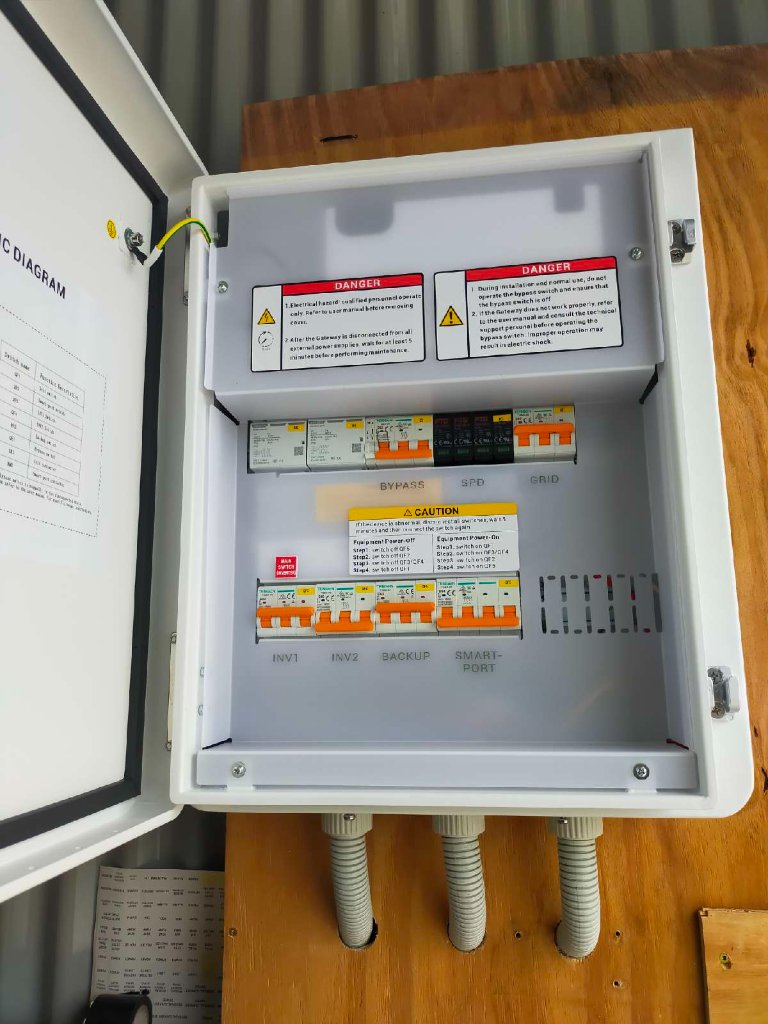
Hybrid battery systems require considerably more planning than a standard grid-connected solar installation. Backup operation, battery protection, gateway configuration and system integration all need to work together as one complete energy system. The installation was built around a three-phase hybrid design with battery integration and a dedicated backup board.
- Three-phase hybrid design
- 30kW Sigenergy hybrid inverter
- Integrated Sigenergy battery storage
- Sigenergy backup gateway
- Dedicated backup distribution board
- Surge protection (SPD) and circuit protection
- PV and battery DC isolation
- Real-time monitoring
- Neat, fully labelled installation and cable management
Lessons from this Project
This project shows that battery storage isn't always about backup power. For some properties, the biggest benefit comes from shifting excess daytime solar generation into the evening and overnight, when the property's largest electrical loads are still running. It's another example of designing a system around how the customer actually uses electricity, rather than simply installing the latest technology.
Batteries don't create energy.
They simply store excess solar energy that would otherwise be exported to the grid. The real value comes when that stored energy can be used later, at the time the property actually needs it. That's exactly what happened on this project. It's a simple concept, but one many customers don't fully understand.
Read about our residential solar and battery storage services, or see the Hamilton residential solar case study for a billing-focused comparison.
Related Services
Residential Solar
Solar designed around how your household actually uses electricity, not just a generic north-facing array.
Learn moreBattery Storage
Shift solar into the evening and keep the important things running in an outage.
Learn moreSolar Monitoring
Live monitoring and ongoing servicing for systems we install and inherit.
Learn moreHamilton Residential Solar Case Study
Our flagship residential case study, backed by real Genesis Energy billing data.
Learn moreCommercial Solar
Engineering-led commercial solar for Waikato businesses and farms.
Learn moreEvery property uses electricity differently.
The best solar system is the one designed around that.
That's why every system we design starts with understanding how you use electricity, not simply how many panels fit on the roof.
Talk to Us About Solar and Battery for Your Property
If your biggest electricity loads happen after dark, or you just want to make better use of the solar you generate, we'll look at how your property actually uses electricity and design a system around it.
Book Your Free Assessment
Tell us about your place and we'll be in touch.